A Wider Lens on Creating Healthier, More Human-Centered Spaces
At Honeybee Harmonix, we see wellness not as a trend or a service, but as a lived experience—one that unfolds through the environments we inhabit every day. As conversations around biophilic design continue to grow, we believe it’s time to widen the lens and introduce a more dynamic, human-centered evolution of the idea: biophilic infusion.
While biophilic design focuses on how spaces are built, biophilic infusion speaks to how spaces are felt, experienced, and integrated into daily life. It bridges science, biology, and sensory experience—supporting healthier lifestyles in a way that is accessible, adaptable, and deeply human.
This article explores both concepts and explains why biophilic infusion is becoming an essential framework for modern wellness environments.
What Is Biophilic Design?
Biophilic design is an architectural and interior design philosophy rooted in the understanding that humans have an innate connection to nature. By integrating natural elements into built environments, biophilic design aims to improve mental health, physical well-being, productivity, and emotional balance.
Common Elements of Biophilic Design
- Abundant natural light and airflow
- Indoor plants, living walls, and water features
- Natural materials such as wood, stone, and clay
- Organic forms, fractals, and nature-inspired patterns
- Visual connections to outdoor landscapes
Where Biophilic Design Excels
Biophilic design is particularly effective in:
- New construction and large-scale renovations
- Corporate offices and institutional buildings
- Healthcare, education, and multi-unit developments
When thoughtfully executed, it can reduce stress, improve cognitive performance, and create environments that feel calmer and more restorative.
The Limitation
Biophilic design is often structural and static. Once a space is built, its impact is largely fixed. It can be costly, time-intensive, and inaccessible for many existing buildings. Most importantly, it does not always address how people interact with the space on a daily, biological level.
Introducing Biophilic Infusion
Biophilic infusion expands beyond architecture and aesthetics.
Rather than asking, “How do we build nature into a space?” biophilic infusion asks:
“How do we continuously integrate natural intelligence into how people feel, move, rest, and heal?”
Biophilic infusion is experiential, adaptive, and alive. It can be implemented in new builds, existing spaces, wellness centers, workplaces, and homes—without the need for construction.
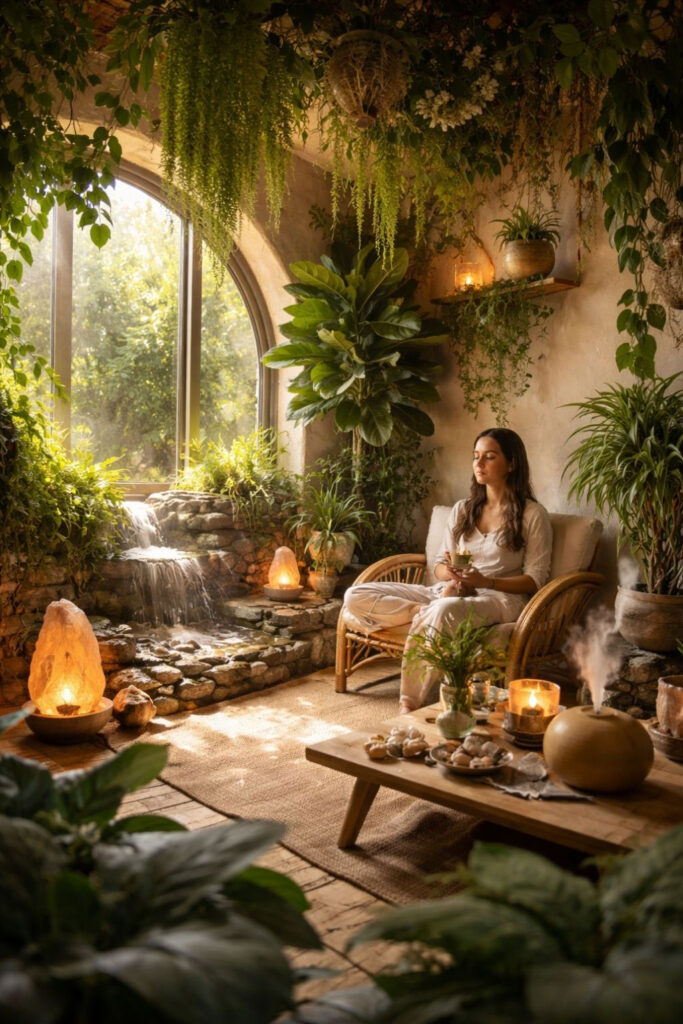
At Honeybee Harmonix, biophilic infusion shows up through sensory environments, botanical immersion, mineral-rich spaces, light therapies, stillness practices, and rhythm-based experiences that support the nervous system.
How Biophilic Infusion Supports a Healthier Lifestyle
Biophilic infusion aligns environments with how the human body and nervous system are biologically designed to function. It recognizes that health is shaped not only by nutrition or movement, but by sensory input, environmental rhythm, and emotional regulation.
1. Nervous System Regulation
Natural sensory inputs—soft light, organic textures, mineral-rich air, silence, and gentle rhythm—support autonomic nervous system balance. Biophilic infusion can:
- Reduce chronic stress and overstimulation
- Encourage parasympathetic (rest-and-digest) activation
- Improve emotional resilience and recovery
In a world of constant alerts, artificial lighting, and cognitive overload, this regulation is no longer optional—it’s essential.
2. Sensory Balance in a Hyper-Stimulated World
Modern environments often overstimulate the eyes and mind while neglecting the body. Biophilic infusion restores sensory coherence through:
- Circadian-aware lighting and red-light exposure
- Botanical immersion and natural aromatics
- Grounding materials like salt, wood, and earth elements
- Quiet, contemplative spaces designed for stillness
The goal is not distraction, but biological harmony.
3. Accessibility and Inclusivity
Unlike large-scale architectural projects, biophilic infusion is accessible and scalable. It can be introduced through:
- Indoor forests and plant-rich environments
- Organic and mineral-based spaces
- Frequency-informed therapies
- Guided breathwork, meditation, and mindful rest
- Seasonal programming aligned with natural cycles
This allows wellness principles to reach people where they are—physically and emotionally.
4. Supporting Habit Change
Health is built through repetition, not intensity.
Biophilic infusion supports sustainable lifestyle change by:
- Creating environmental cues for rest and regulation
- Making wellness feel intuitive rather than clinical
- Encouraging slower, more intentional behavior
When people consistently feel safe, calm, and supported in a space, healthier habits emerge naturally.
5. Reconnecting to Natural Rhythms
Biophilic infusion emphasizes alignment with:
- Circadian rhythms
- Seasonal shifts
- Natural cycles of effort and recovery
This alignment supports improved sleep, mood stability, immune function, and hormonal balance—foundations of long-term health.
Biophilic Infusion as a Living System
Unlike static design, biophilic infusion is never finished.
It evolves with:
- The people who enter the space
- The seasons and natural light cycles
- The collective nervous system needs of the community
At Honeybee Harmonix, we view our environment as a living organism—one that responds, adapts, and supports healing over time.
The Bigger Picture
Biophilic design helped us build healthier spaces.
Biophilic infusion helps us live healthier lives.
By shifting the focus from structure to experience, from aesthetics to biology, and from static environments to living systems, biophilic infusion offers a deeper, more sustainable approach to wellness.
It reminds us that nature is not something we simply observe—it is something we participate in.
At Honeybee Harmonix, we believe that when environments are infused with natural intelligence, people remember how to regulate, restore, and return to themselves.
Kyle McNaughton – Honeybee Harmonix Inc.